6 free tutorials · Beginner
Draw Cute Animals: From Simple Shapes to Your Own Characters
Beginners can learn to draw a sleeping cat, a folded-ear bunny, a curious puppy, a frog on a lily pad, a swimming axolotl and a sitting fox. Drawing these simple animals helps to build up the basic forms and then to vary expressions, proportions and individual features.
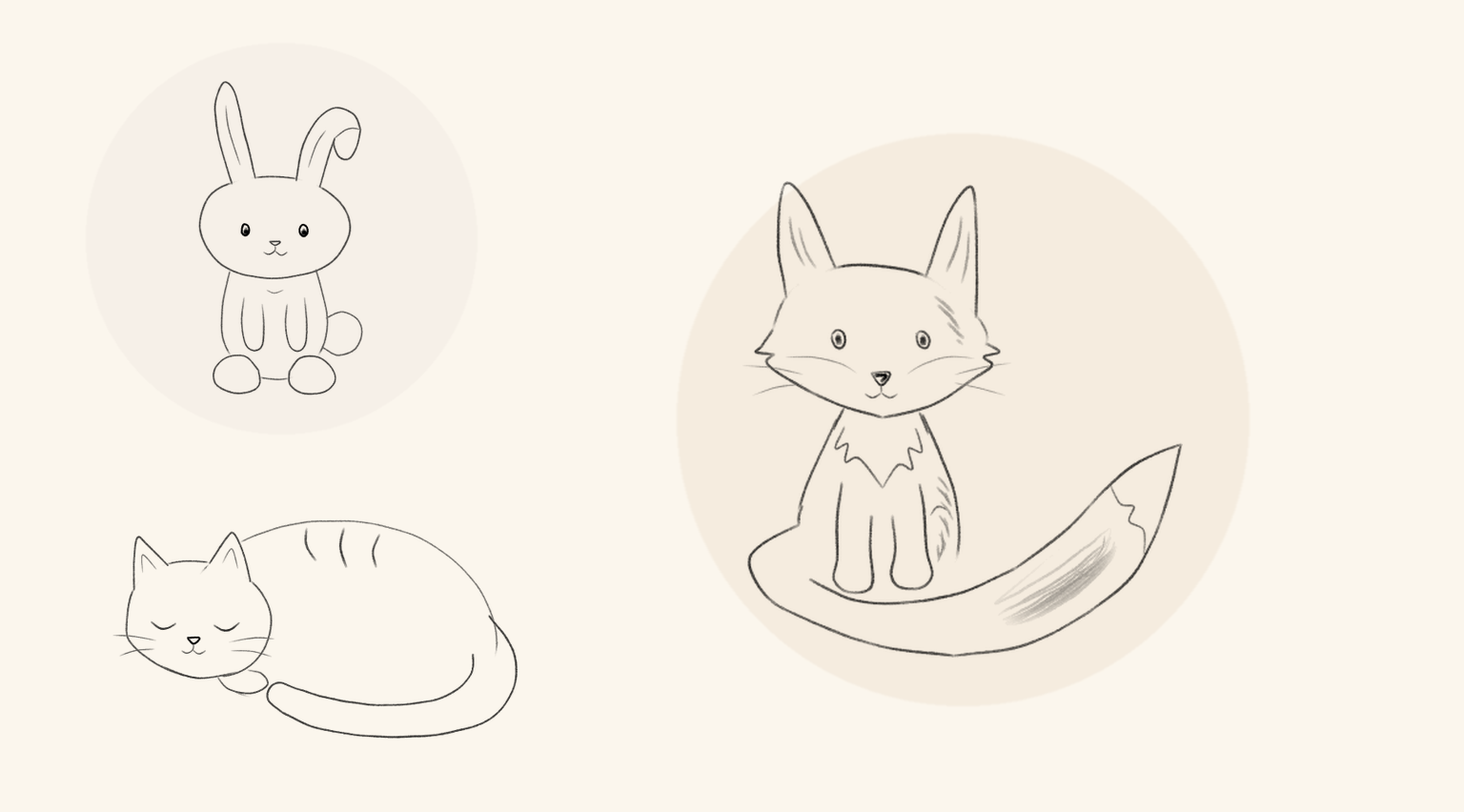
The drawings
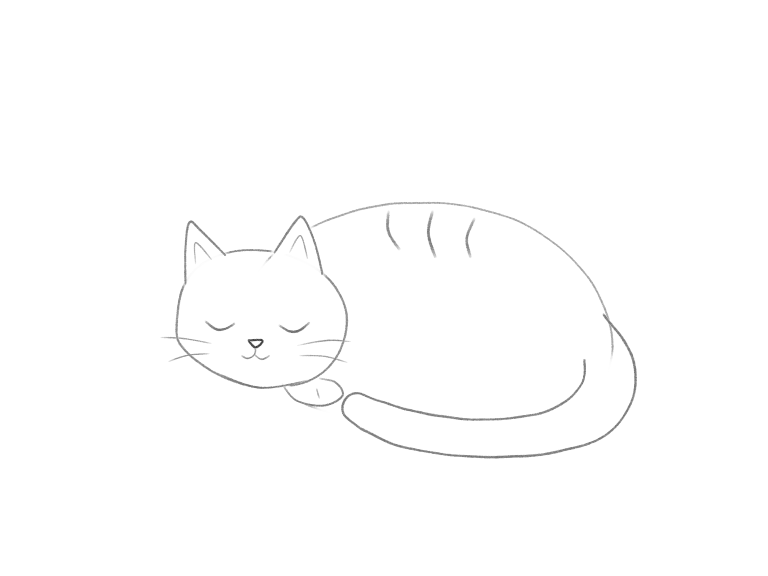
Draw a Cute Sleeping Cat
Practice: Draw a curled up sleeping cat made of a broad body and a small head. Work out which features sit in front of the others and where their lines should stop. Draw a small face, one paw and a curl of tail.
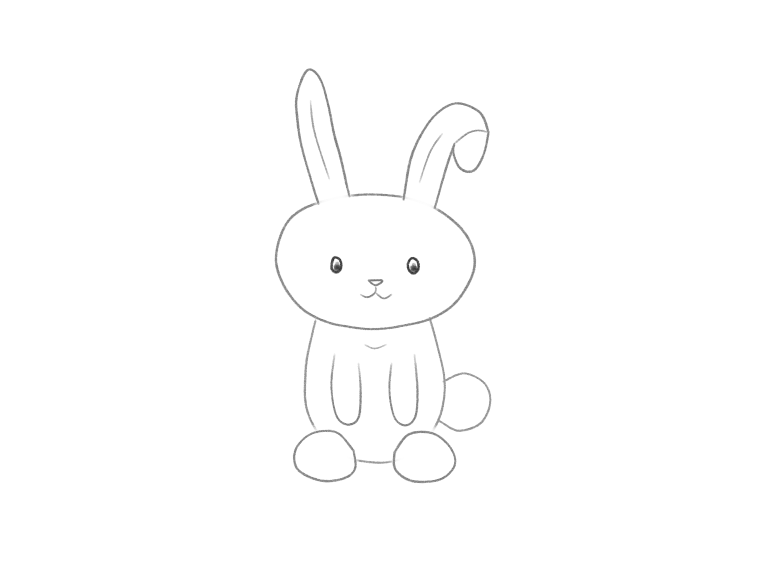
Draw a Cute Bunny with One Folded Ear
A simple seated bunny, a large head on a small body with one folded ear. Proportion and intention to create an unusual personality within simple form.
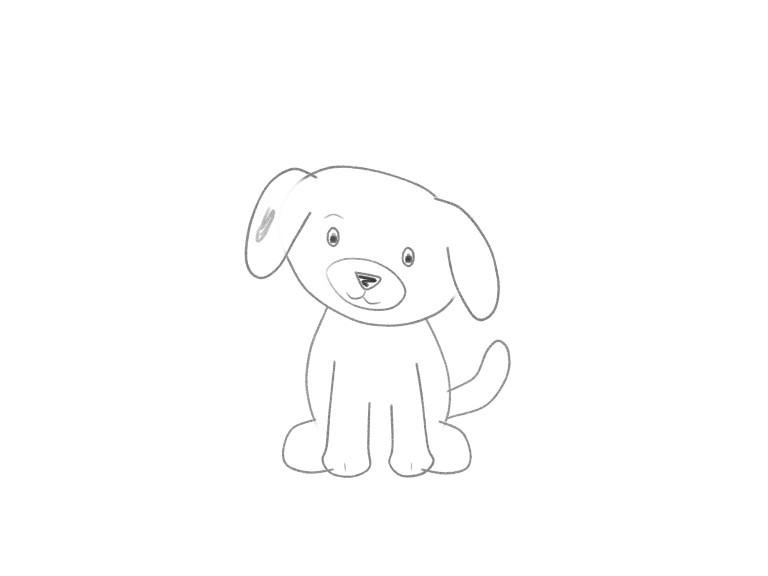
Draw a Curious Puppy
Draw a seated puppy with floppy ears. Draw him with a gently tilted head and ensure that the eyes, nose and mouth are all aligned to give him a very curious expression.
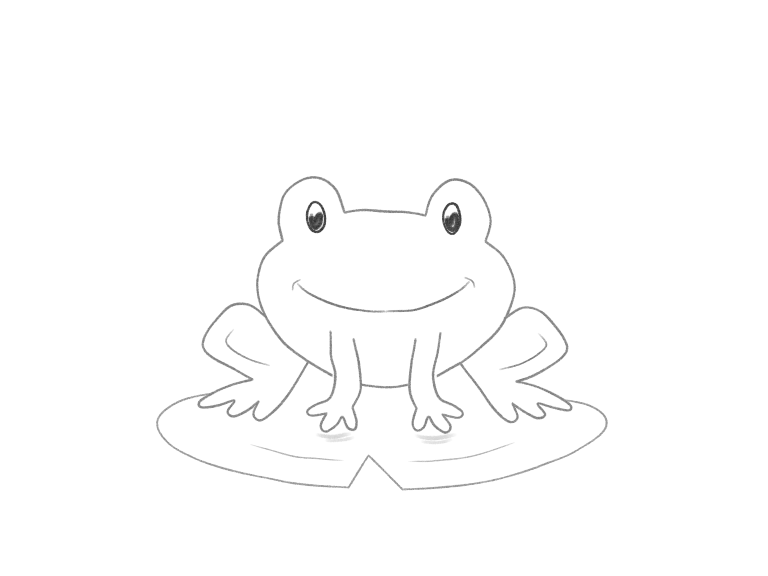
Draw a Frog on a Lily Pad
Draw a cheerfull low sitting frog with folded back legs and small splayed feet. He sits on a notched lily pad beneath him, with its edge behind his feet. Try to explain the fold of each back leg by using simple contours. The background lines should be hidden under the animal.
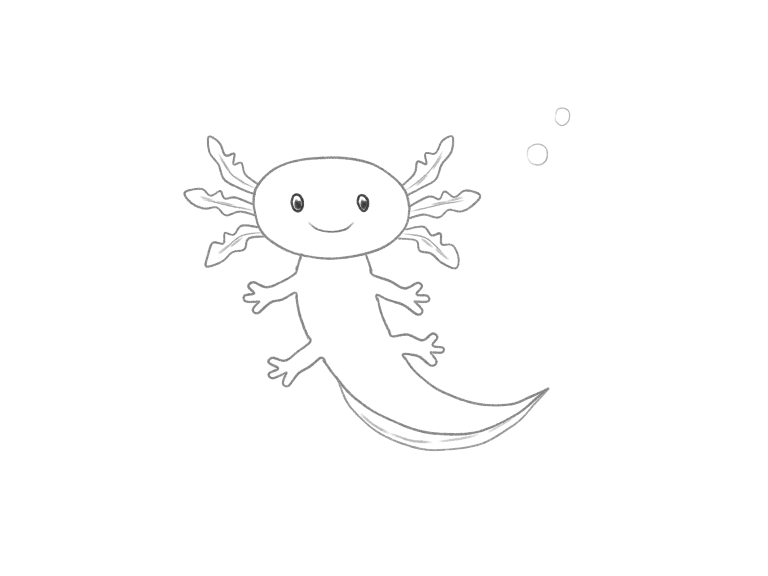
Draw a Cute Axolotl in Motion
Draw a swimming axolotl with a broad smiling head, six softly frilled gill shapes, four small limbs, and a curved tail fin. Make a connected pose and use the same shapes again and again but with slight variations.
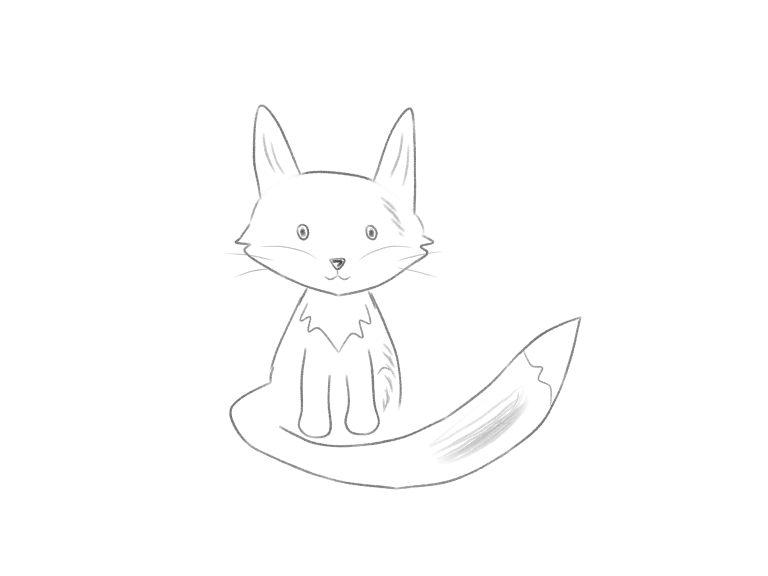
Draw a Cute Fox with a Sweeping Tail
Draw a fox seated on the ground and look at it from the front. Its pointed ears will be soft and rounded. Its broad cheeks will be very wide. A big, bushy tail will sweep from its rear side into the lower foreground. Draw the fox using clear overlaps, contrasting shapes and limited use of light and dark pencil tones.
Two ways to use these lessons
You’re here
Free tutorials
A picture of every step, written instructions and a replay of the pencil strokes. Draw on paper or in any app you like. No account and no scores.
Guided course
You draw each step on our canvas and send it to Luna, our virtual coach. She tells you what to fix before you move on, and your drawings stay saved in your account.
Lesson 1 is free. The rest of the course is a one-time purchase.
See the guided courseGuided lessons
Watch Luna look at a drawing
Short recordings from our guided courses. A drawing goes to Luna, she circles what’s off and explains the fix, and the corrected drawing is checked again.
Before you start
Adults and teenagers just starting to learn to draw, with little prior experience and drawing ability.
A screen that you draw on with a mouse, stylus or touch input. In the guided lessons you use the lesson's pencil and eraser. For the public tutorials, good old paper, pencil and eraser work too.
You don’t need: Drawing experience, perfect circles, color, realistic fur, or expensive materials.
Allow 15-40 minutes for each animal and pause the tutorial when needed to continue drawing.