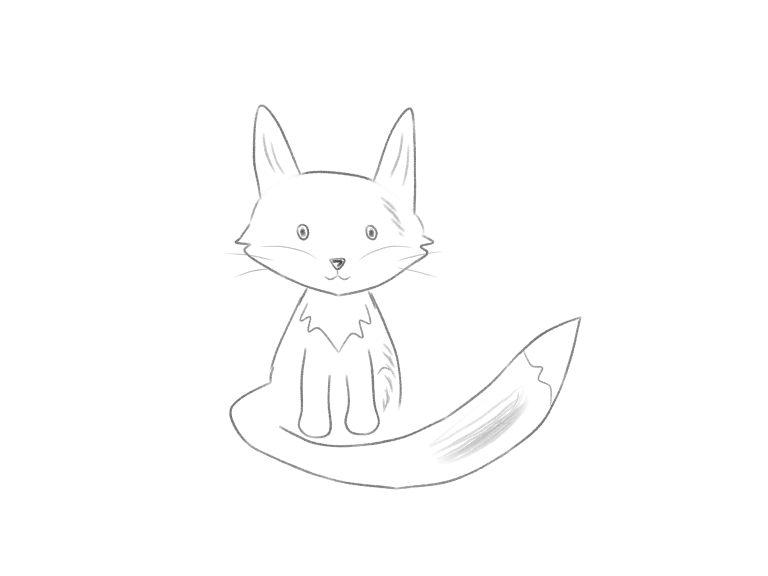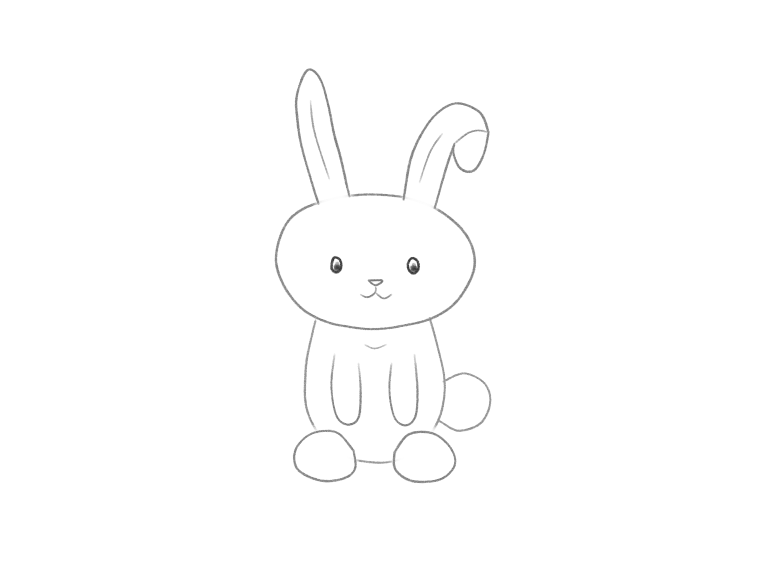
A head that looks detached or a leaf line that crosses a foot needs a clearer connection. Find out where to join a contour, stop it, or erase a small section of line.
Some drawings look a little odd although individual forms are adequate. The head appears to float in space, a foot looks glued to the bottom of the page, or the tail appears as a separate entity to the body. Go back to the join between forms and make a small change to make the whole animal clearer.
Does this part join with another form? And is this part in front of another? The answers tell you where to join the outlines and where to stop a hidden line. A limb needs a route into the body. A leaf behind a foot needs its line to stop.
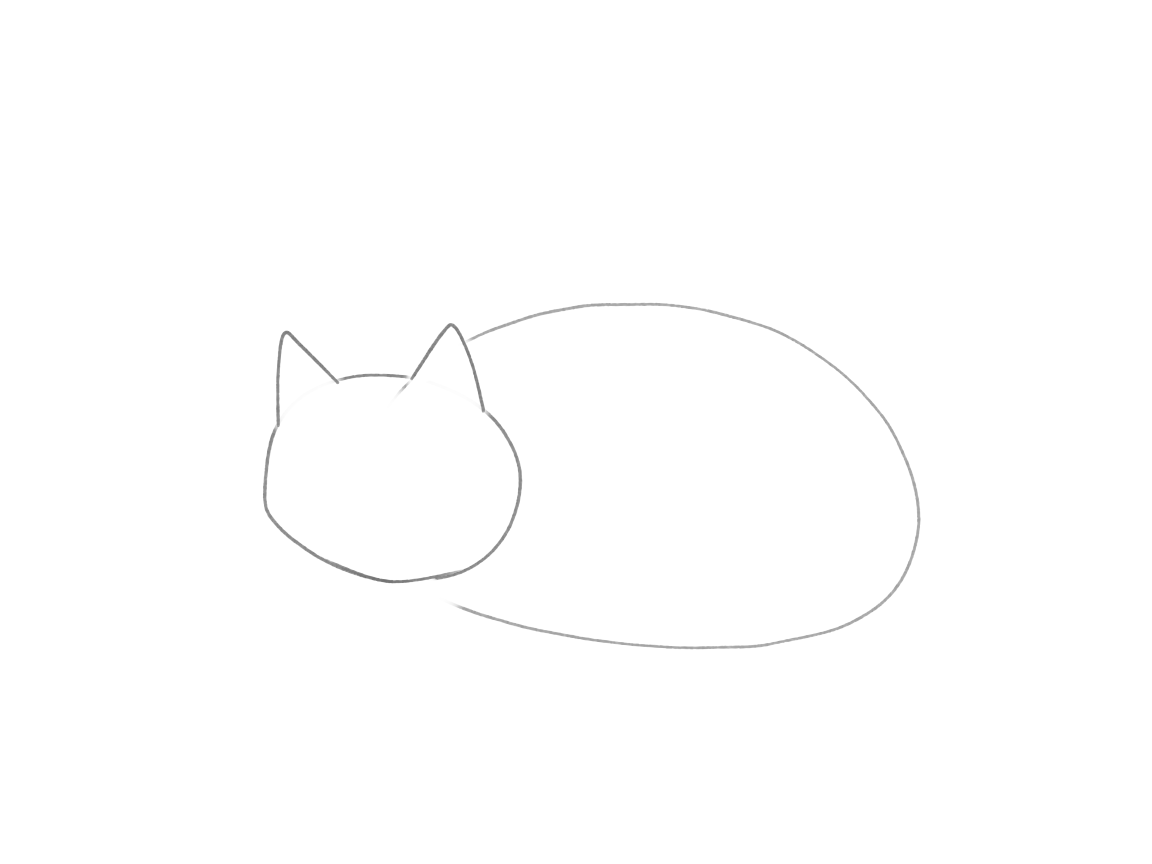
Make the head touch the body
In the cute sleeping cat tutorial, the head is placed on the front of a larger body and rests against it. If you leave a small space between the head and body then the cat will look as if it has been drawn in two separate bits and not as one complete creature. Instead, try to draw the head closer to the body or extend the body to include the head.
Drawing an object over another object can leave an earlier line going through the object that you are trying to draw. This line should not be visible because it describes the surface of the object behind it. So erase or cut off this line where it passes through the foreground object. You don’t need to add extra lines to explain the overlap.
Open a small gap for an attached limb
You draw a closed body outline. Later you want to add a leg. A small shape for the leg is easy to draw but when you put it beside the body, the original body line cuts across the root of the leg. It looks as if you glued the leg to the surface.
Erase a short section of the body outline. Begin a limb at one end of the opened section and travel along the limb to the foot and back, eventually closing the section at the other end. The torso will still be clearly defined if the opened section is kept short enough.
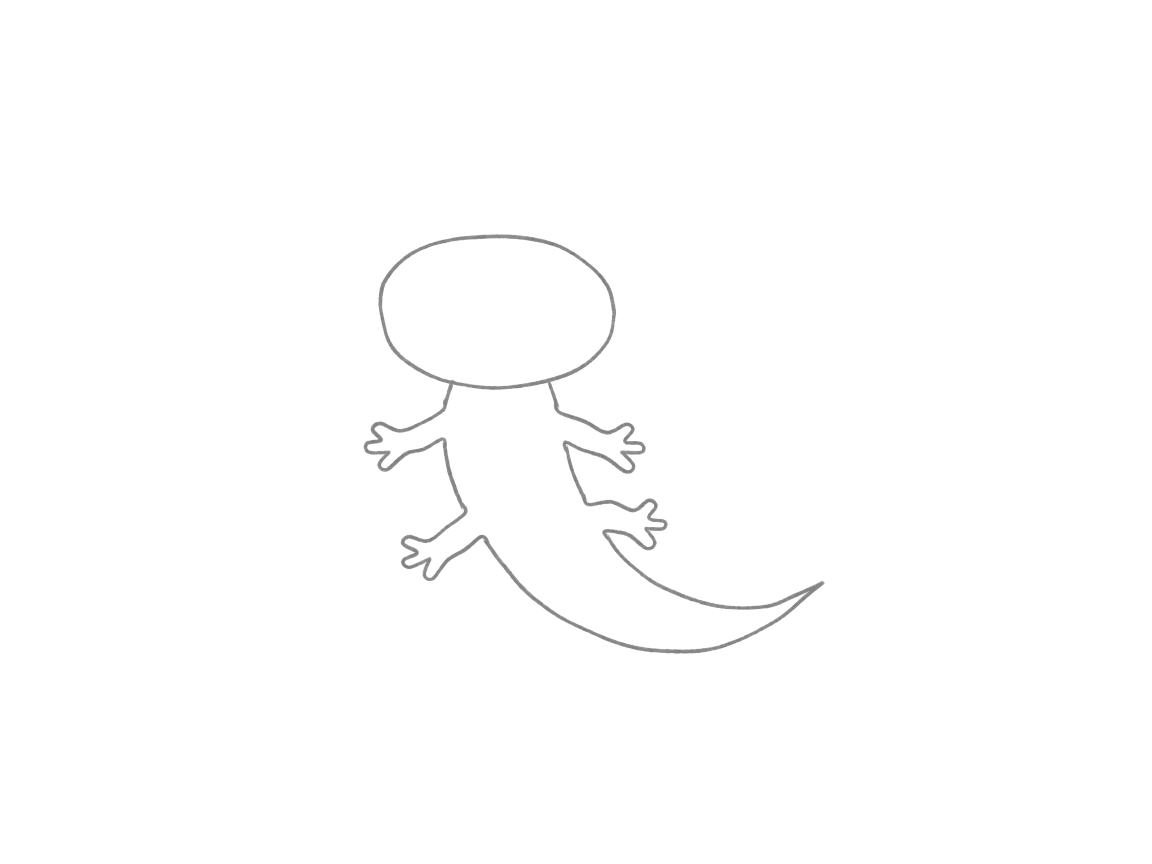
In our cute axolotl drawing lesson for beginners the four limbs are drawn at separate places along the torso. The front pair is attached right behind the head and the back pair is attached before the tail starts to narrow. Each foot is drawn with different angles and even different shapes. Each limb looks like it belongs to the body and each attachment is clearly visible.
Let the background line disappear
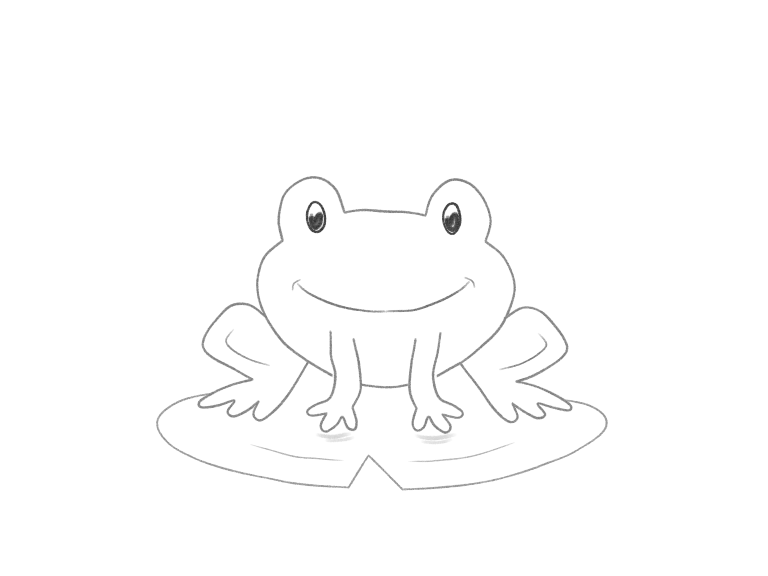
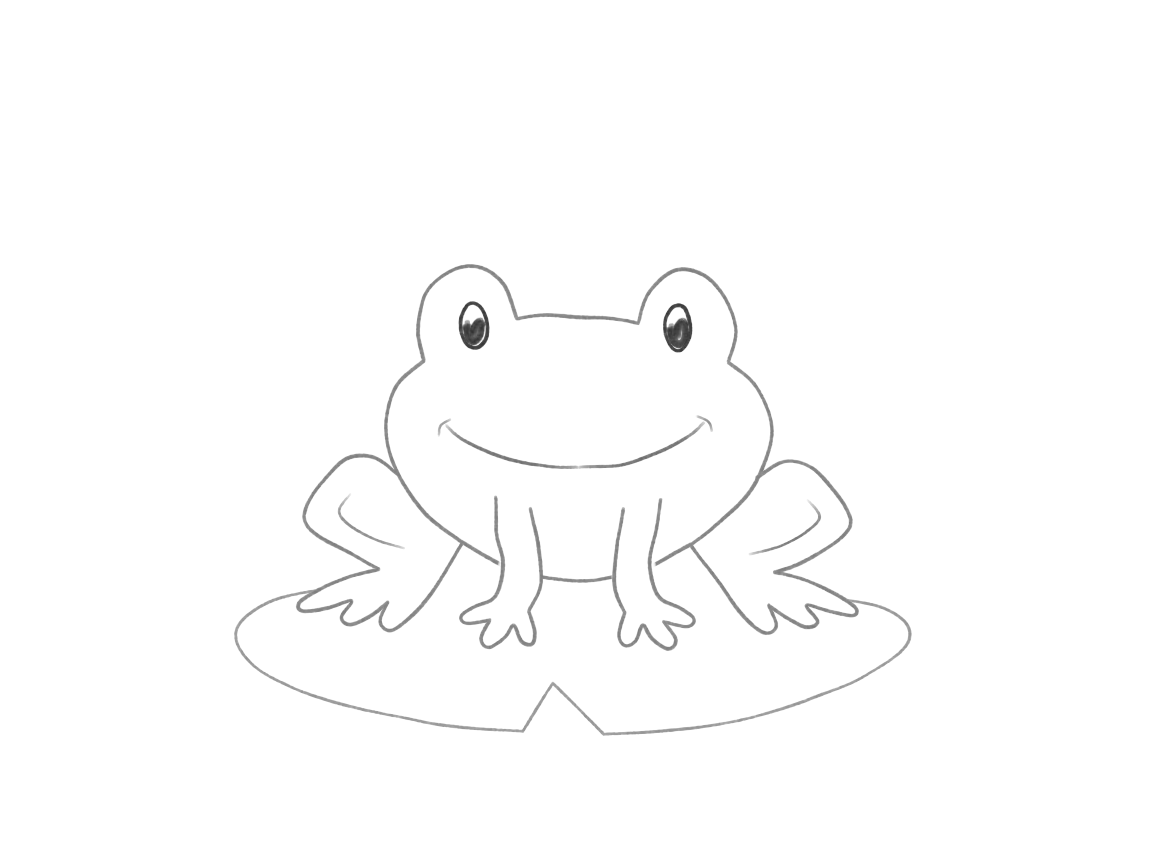
A lily pad supports a frog’s body in the composition, but the outline of the lily pad should never cross over the body of the animal. You draw the visible parts of the leaf around the body and feet of the frog. Where the frog’s body covers part of the leaf, you leave that part of the leaf’s contour out.
Even though the feet are in front of the leaves, you can still stop the line of the leaf where it would cross a foot and pick up it again further back where the leaf becomes visible again around the frog.
This also means surface contact must be placed sensibly. So a heavy shadow cannot make a foot reach a surface when there is still a large blank area between the foot and the surface.
Follow the contour with your eye
Choose one connection to trace out with your eye, without drawing. For a limb, trace from body to foot and back again. For an area of overlap, trace out the edge of the form in the front and then the line that stops at it for the edge of the form behind.
Also, pay attention to the size of the problems you are solving. An uneven curve with good attachment to the rest of the form is probably fine to leave as is. A small wobble to a toe probably needs less correction than an entire tail is peeling off from the back of the body.
A short practice exercise
Using rounded volumes draw a simple body and add one short limb through an opening in the contours of the body. Next to this draw a foot over the edge of a flattened leaf stopping the hidden line of the leaf where it is hidden by the foot.
Now return to your animal and work on one junction. You can leave the proportions, the expression, slight deviations from perfect symmetry and all details unchanged and still improve.

Drawize Academy
The Founder of Drawize Academy. Originally creator of the Drawize game, a simple online game which has served over 10 million players.