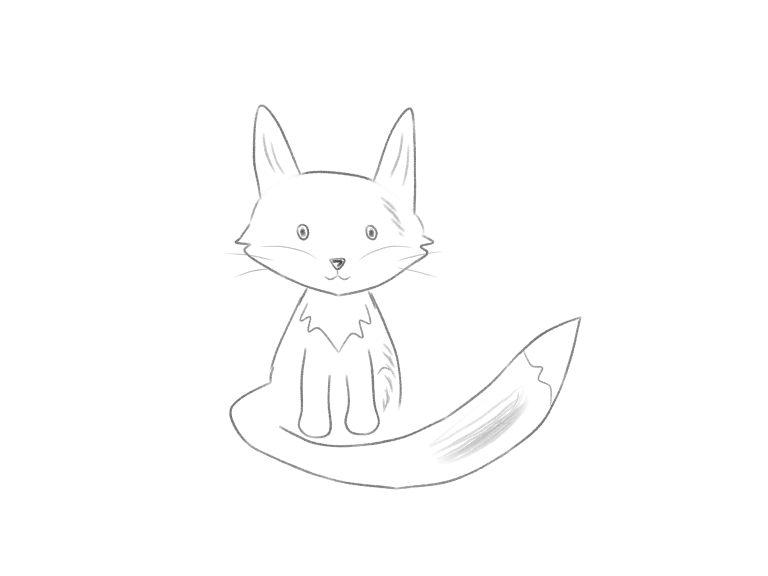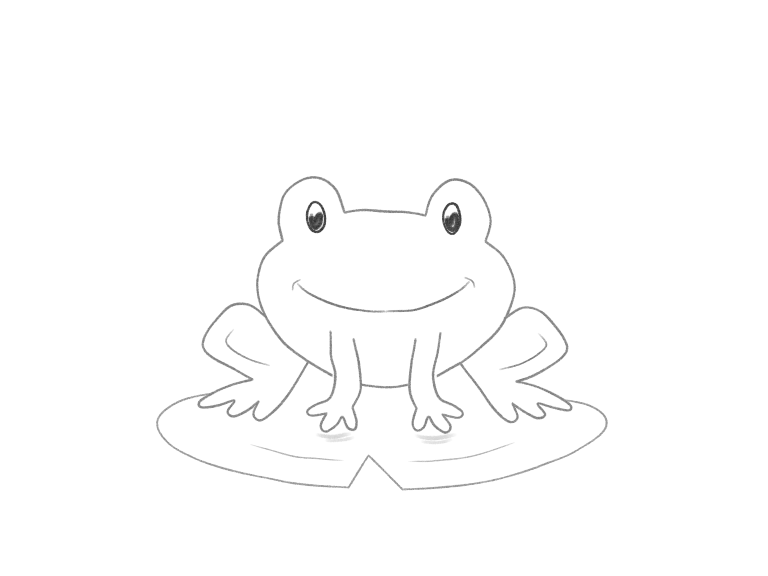
Work out the head and body before adding too much detail to your animal. Use simple forms of a cat, bunny and puppy to explore proportions rather than trying to draw a perfect oval.
A simple pair of shapes can look awkward if the ears have nowhere to go, but a character with ‘uneven’ outlines can look very endearing if its head rests against a large body. It is very important to consider two things first: the proportions of the main shapes and where they will meet.
This doesn't mean that you have to choose a specific "cute" ratio. No, every animal is different and needs different proportions for the same pose. Here you just decide on the size of the largest forms and where they are in relation to each other.
Start with the space the animal needs
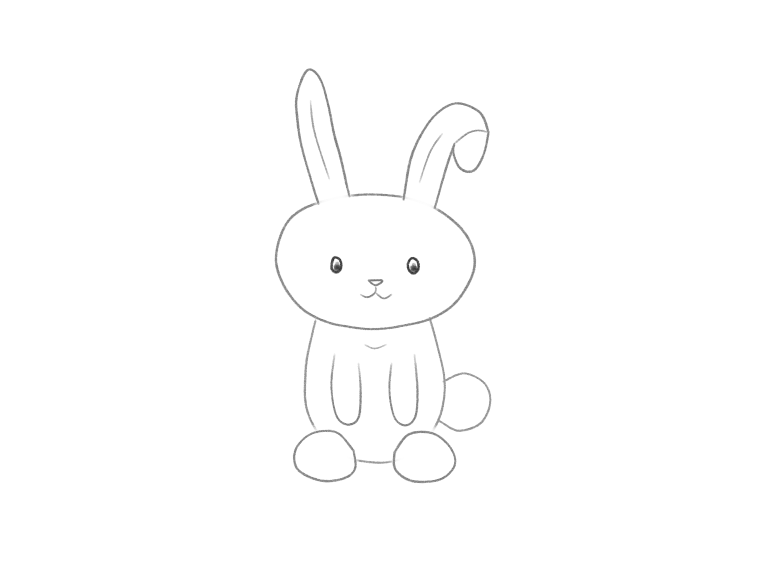
Start with the space the animal needs. Typically a feature will extend past a central mass of the animal’s body, i.e. the long ears of a bunny extend up and above its head. So consider where the feature will extend in space and use that to start drawing the animal’s body. Look for the highest, lowest, leftmost and rightmost points of the animal and lightly point to them with a hovering pencil to determine where to place the first major mass of the animal. Keep these points comfortably inside the boundaries of your paper or canvas.
Before you begin to draw, indicate the highest point, the lowest point, the leftmost point and the rightmost point that your animal will require. This can be done with a light pencil mark or even with a hovering pencil. You can then judge from these light marks whether your animal will fit within the boundaries of your paper or canvas. If it appears that it will be too tight then return to your rough sketch and re-proportion the animal.
A broad body makes room for a resting cat
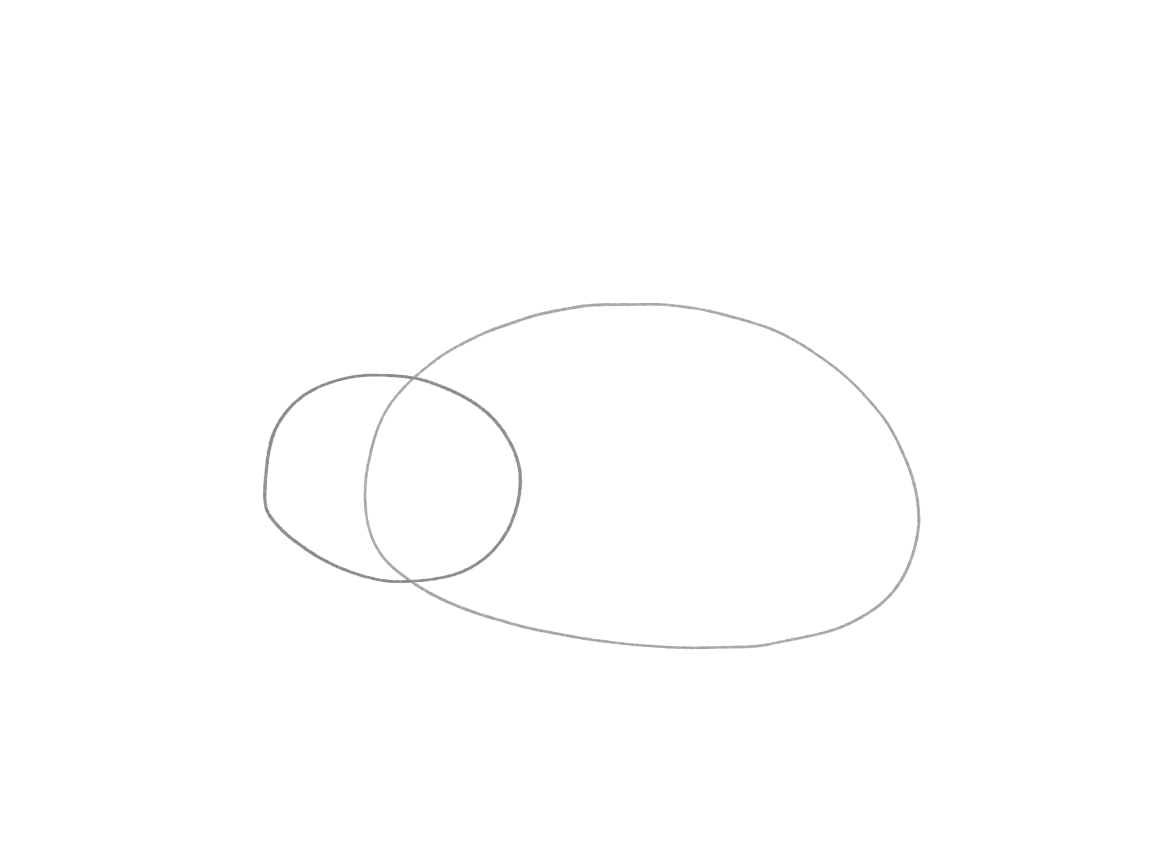
Start with a roughly rounded body, which will form the main part of the body of your sleeping cat. Against the front of this sits a small head. In the case of this example drawing the head will sit on the front left of the body. Make sure the head sits into the body so that the two forms overlap slightly. The exactness of the forms is not important at this stage.
For the width of the body compared to the head, a good starting point would be to draw the head roughly half the width of the body, and also compare their heights, because a head can be relatively narrow but still be too tall for the body. The body should be the largest mass on the page, but that does not mean that it cannot be drawn to be relatively shallow.
You can make a rounded body cat, or a longer body curled up cat. The longer body will stretch the curled pose, but either body shape should still be larger than the resting head. Leave enough room for the tail to wrap around the cat in the foreground.
A large bunny head changes the balance
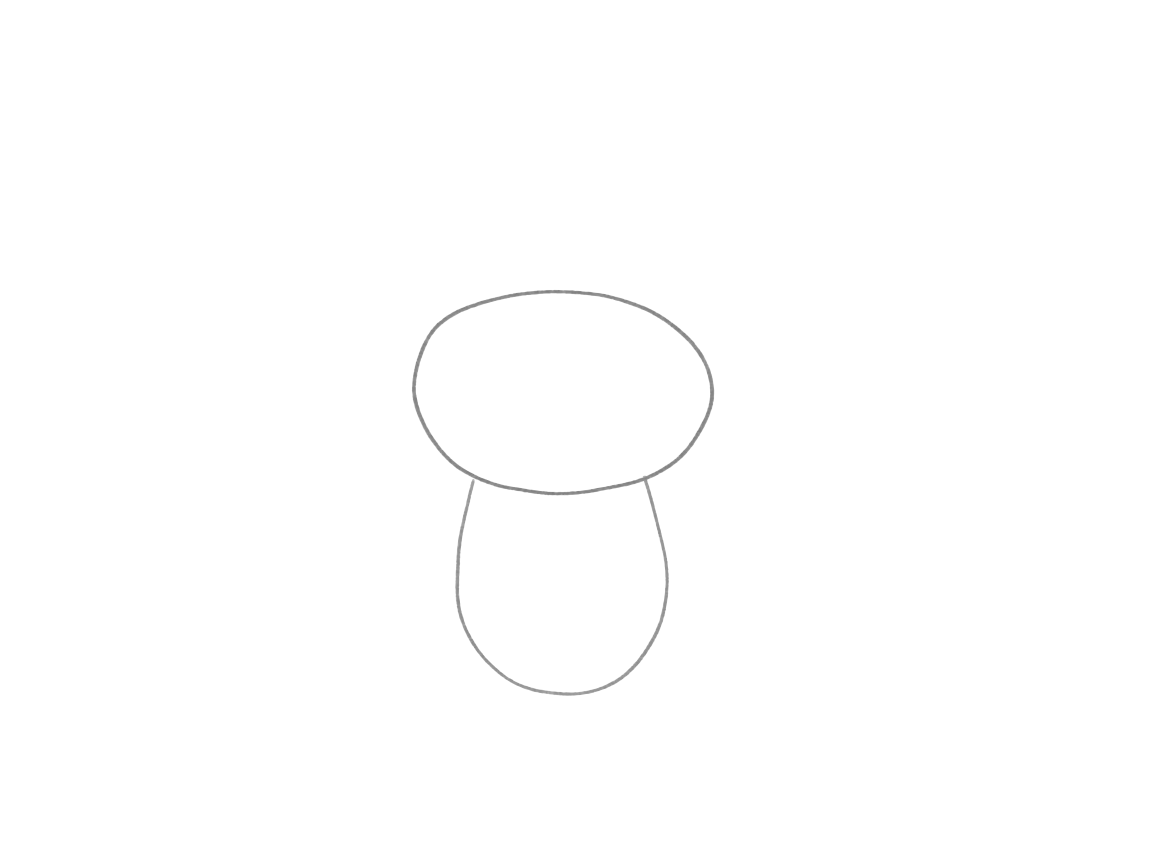
A seated bunny has a large head upon a small body. The head gets the most attention but the body of the bunny supports the head. Remember that the long ears of the bunny will extend up from the head, so place the head below the top of the space that you have allocated for the bunny.
Remember, in varying the proportions of the parts of your animal, compare the sizes of related parts without making them all the same size. In short, compare the neighboring forms rather than measuring and comparing each individual form. For example, if you decide to make the head of your animal larger than usual, keep the front paws small in comparison to the back paws and make sure there is room for them in front of the body.
Give the face one place to belong
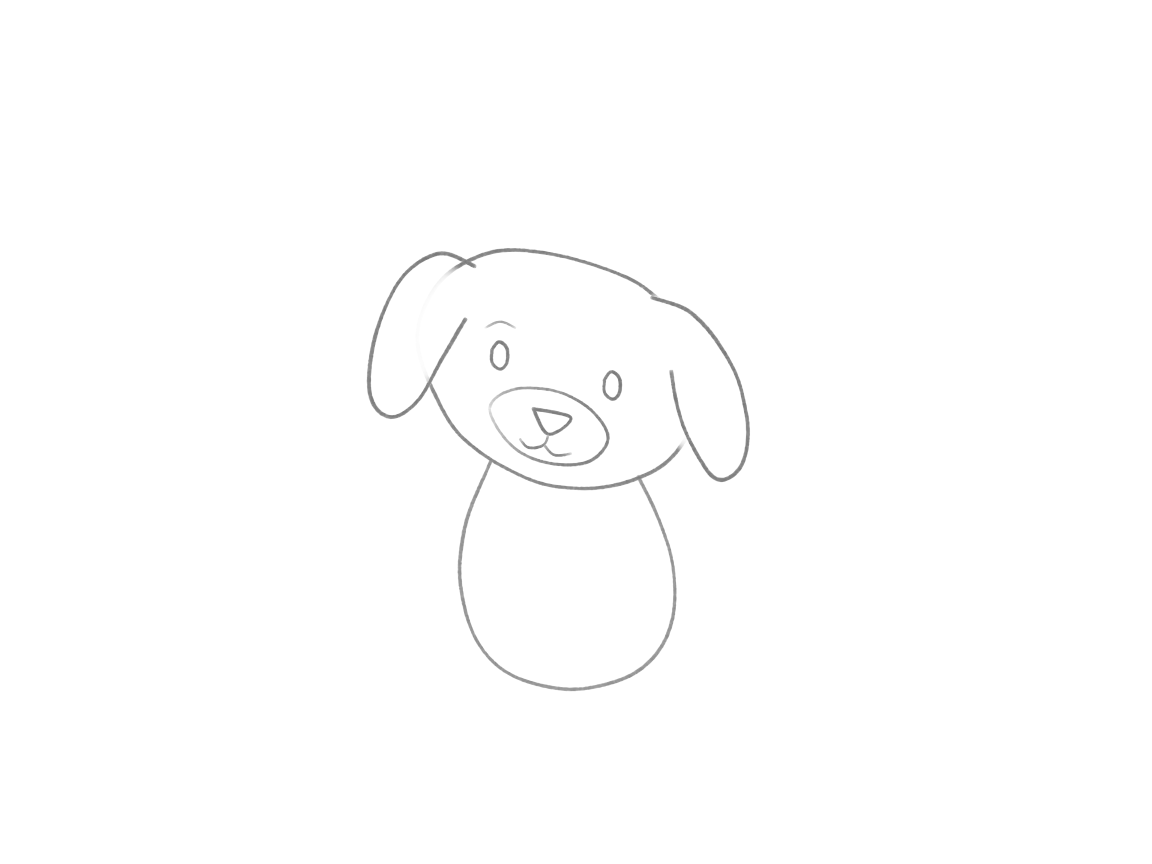
As you prepare to add the eyes and the nose of the animal, restrict the features of the face to a small area within the head. For the puppy’s curious face, for example, the features of the face area are drawn to tilt with the head. The eyes, therefore, can be drawn at different heights on the page and still work well in the composition provided they follow the same tilt as the head and are drawn on either side of the center of the face area. The nose sits below the eyes and the muzzle follows this same tilt.
For example, in the curious puppy tutorial the entire face area tilts to one side with the puppy’s head. The placement of the eyes on either side of the center line of the puppy’s face will mean that they are not identical in terms of height from the bottom of the canvas but they will both be working within the same head that you have previously drawn.
Try two small versions
Draw up two small versions of a head and body next to each other. Make the body of one of them rounder, and the head of the other one slightly bigger. Try to keep the main size relationship for that animal as before. Now compare the two versions and see if one of them leaves more space for the ears, for the back paws, for the tail etc. than the other. Finish that version.
Keep it simple. Compare two simple drawings of the same animal. Make only one change in the proportions between the two animals in each pair of drawings. You do not have to complete both animals. Stop the other one at the point where you would normally begin to add the details. You are practicing a decision that you must make before you start to add all the details to draw an animal.

Drawize Academy
The Founder of Drawize Academy. Originally creator of the Drawize game, a simple online game which has served over 10 million players.