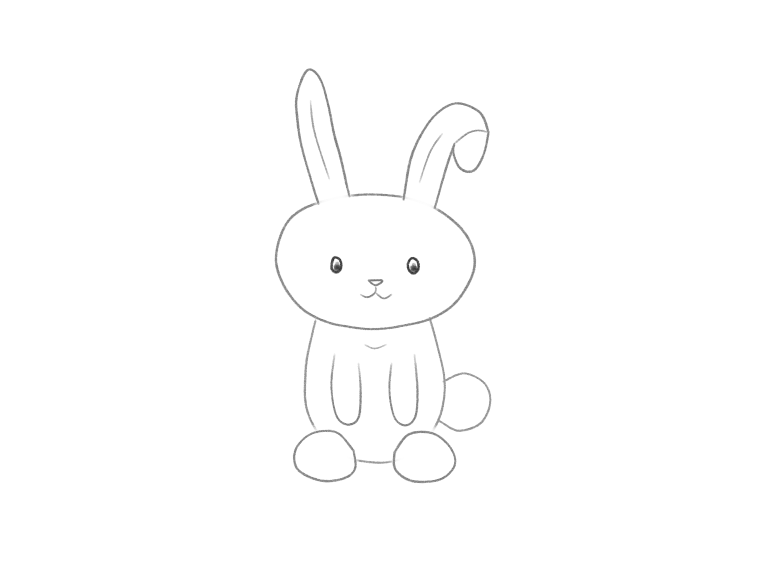
Use white paper, a few middle tones and a few dark accents to finish a Fox, a Frog or a sleeping Cat. Emphasis will be on clearly drawing the face and the overall silhouette of the animal.
A cute animal does not need to be shaded in every open space. If the silhouette of the animal, the face and the connections between them are clearly recognizable then a few accents are sufficient. Before adding the accent decide what it is supposed to explain.
For the animals in this course, the job of tone is very small. It needs to define face, distinguish between coat regions that have already been defined, and provide sense of contact with surface. It does not need to reproduce realistic lighting or to complete the forms of the animals.
Check the line drawing first
Before adding shading to your drawing, step back from it and take a look at it from a little distance. Can you recognize the head, the body, the limbs, the tail? Are all the features of the face grouped together? If a tail seems to come from the wrong part of the body, then adding more darkness to that part will only make the error more apparent.
We define the light areas of the fox first in the lesson, the light chest and the light tail tip. These boundaries belong to forms we can already draw. So even as we finish the drawing up, we can still preserve the character of the fox.
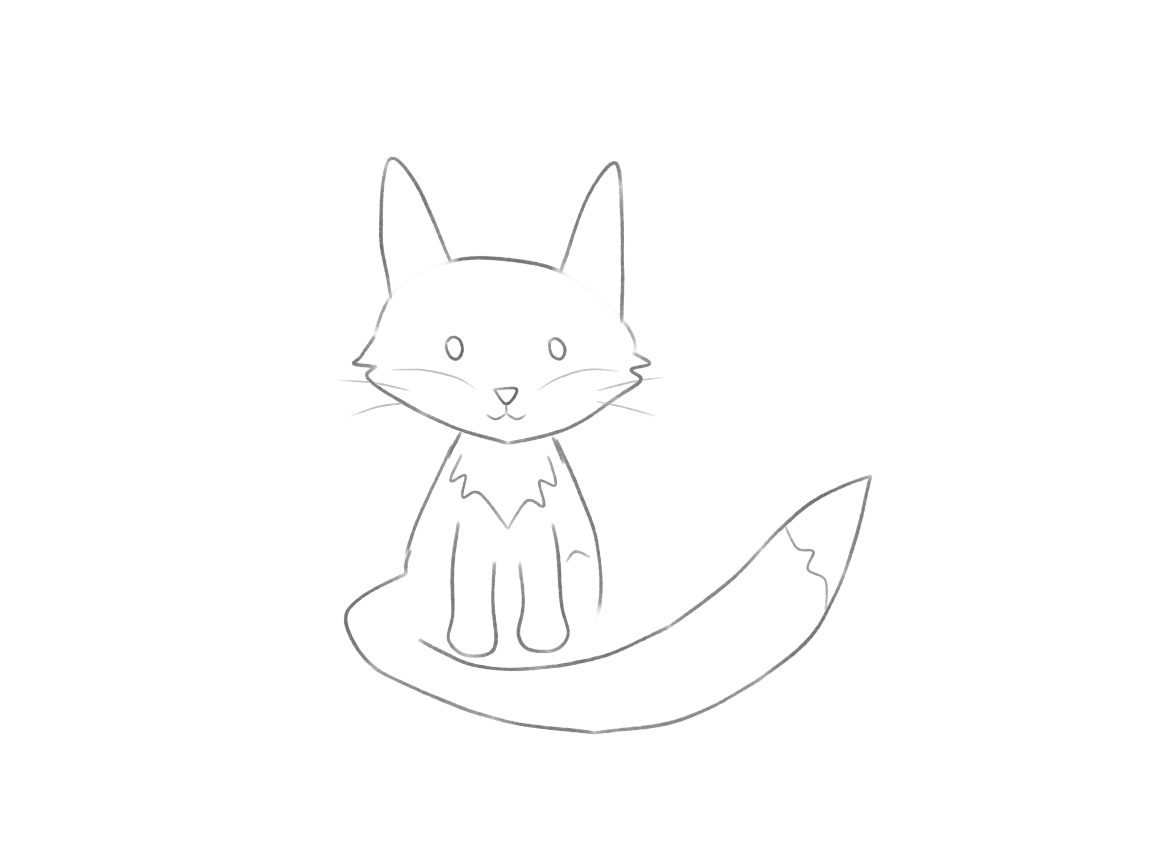
Use three simple value groups
Use the white of the paper or canvas as your lightest value. This means not drawing a white area with many light marks, but instead leaving the muzzle, the chest etc. as they are.
Add the slightest amount of medium tone to a few areas of the animal’s coat. These few lines will give the illusion of form without dominating the image. Remember to keep the direction of the lines along the contours of the shape, along the sweep of a tail, for example. Also, remember that you don’t need to create an even grid of lines to fill an irregularly shaped area.
Dark accents are reserved for the smallest details in your face: eyes and nose. As they are so small, they draw attention to themselves whilst the rest of the head remains light. Make sure the mouth and the muzzle are visible against the darker areas of the face.
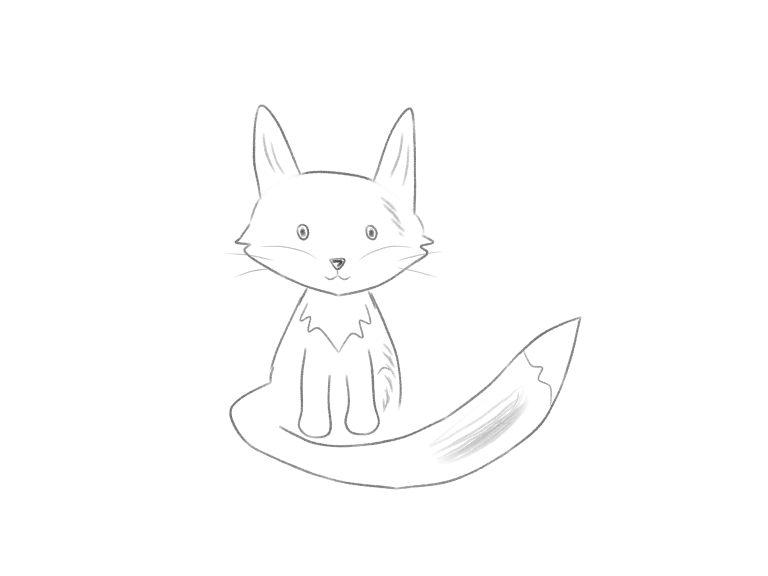
Make a few marks, then pause
Continue making marks in one area until you feel that the area has become a middle value and can be left. If you continue making marks in that area until all the paper is filled with marks then the area will become too dark. This will draw attention away from the eyes and nose of the face.
Don’t feel that you have to lift every single mark from a previously shaded area. Use the supported eraser to gently lift enough marks to make the area lighter and readable again, keeping the important contour intact. This may not mean returning the area to pure white.
Remember that every stroke is intended to be part of the overall structure of your drawing, and the difference between consecutive strokes is normally quite small. Choose their direction, length and placement to suit that area. This shared purpose gives them coherence.
Keep a contact shadow small
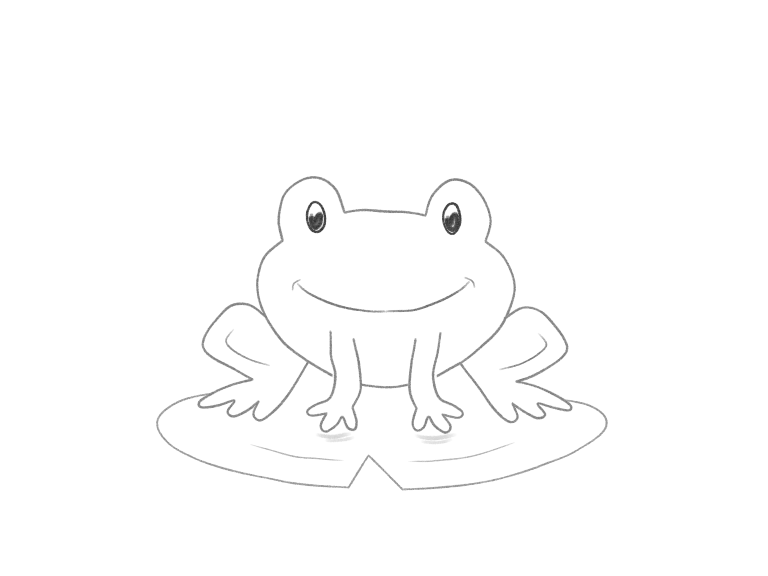
The little frog on a lily pad contact accents below the feet of the frog are restricted to a few areas and support the area where the frog touches the leaf. They do not form a dark ring around the whole frog.
Check that the feet reach the leaf and that the leaf outline stops behind them. You may even leave the paper unshaded when those forms already establish the contact. No particular shadow darkness is required.
Know what you can leave out
The simple drawings of the sleeping cat are comprised of a few simple strokes. They don’t need fur, or a colored blanket, or even a big dark shadow in the lower part of the page. A mark has to follow a line of the body or indicate a feature. Otherwise it only adds more work.
For a short independent exercise use one of your finished animals to add 3 small dark accents to it. Work the rest of the drawing as if it were to remain mostly light and then decide if a middle tone is needed for any part of the drawing. If you can’t tell what area you are marking then leave it well alone!

Drawize Academy
The Founder of Drawize Academy. Originally creator of the Drawize game, a simple online game which has served over 10 million players.